
Token Vesting vs Token Locks: What’s the Difference and Which Should Your Project Use?
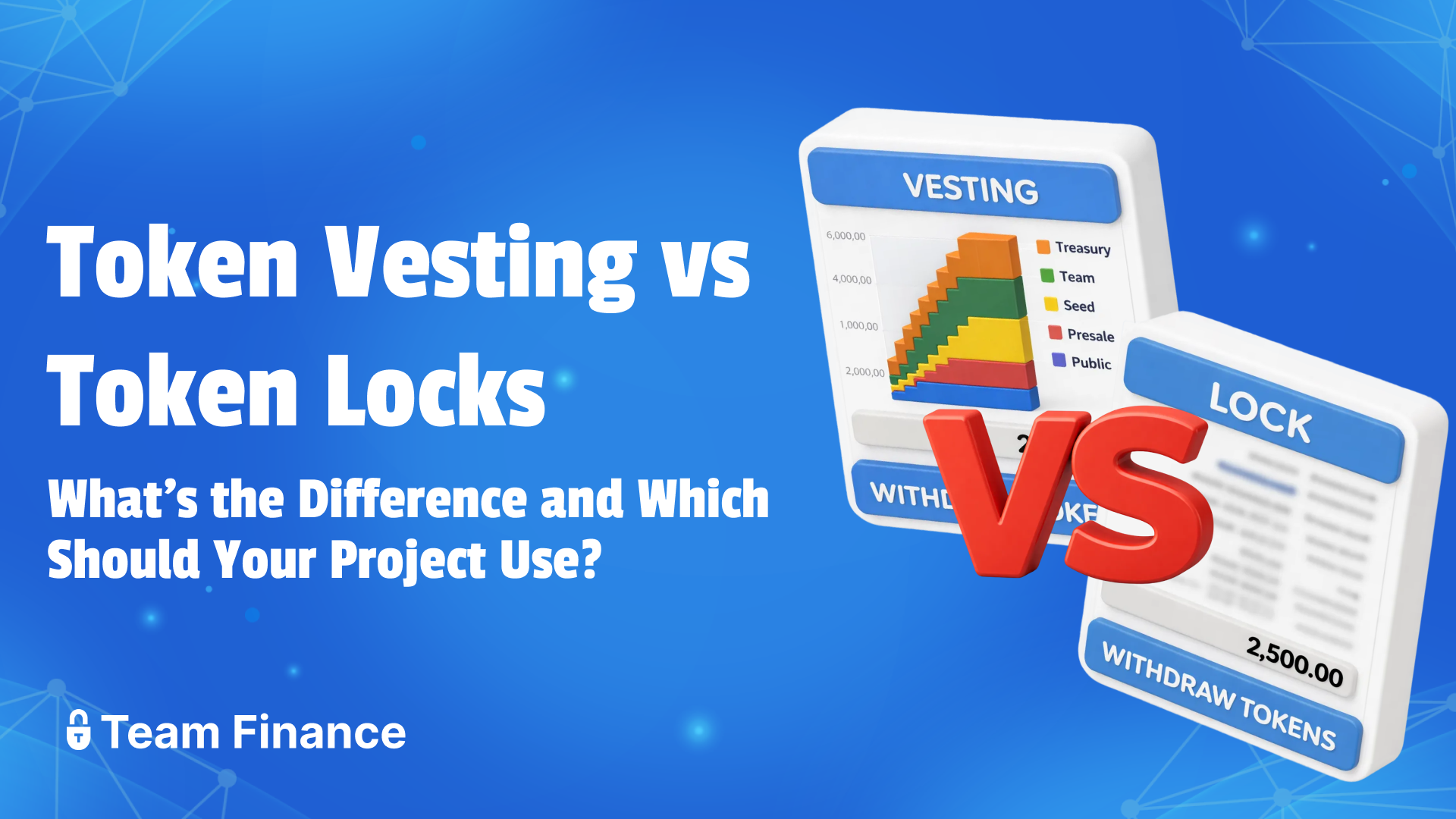
When launching a token, how tokens are released matters just as much as how many exist.
Two of the most common mechanisms used to manage token supply are token vesting and token locks. While they are often mentioned together, they serve different purposes and are designed to solve different problems.
This article explains 👇
- What token vesting is
- What token locks are
- The key differences between them
- When to use each
- How projects typically combine both

📊 What Is Token Vesting?
Token vesting releases tokens gradually over time based on a predefined schedule.
Instead of receiving tokens immediately, recipients unlock them in portions according to conditions set at launch.
Typical vesting parameters
- Cliff period: Time before any tokens unlock
- Vesting duration: Total length of the vesting schedule
- Release frequency: How often tokens are released
- Allocation type: Investor or employee
Example
A team allocation may include:
- A 12-month cliff
- Followed by 36 months of monthly release vesting
Tokens remain locked during the cliff, then unlock incrementally over the vesting period.
Why projects use vesting
- Aligns long-term incentives
- Simple automated distribution of tokens
- Limits early sell pressure
- Improves transparency
- Builds investor confidence
Vesting is most commonly applied to investors, team members and advisors.
🔒 What Are Token Locks?
Token locks restrict tokens entirely until a specific unlock date, when the full allocation becomes available at once.
Common use cases
- Liquidity pool (LP) tokens
- Treasury or reserve allocations
- Ecosystem or marketing funds
Example
A project may lock:
- LP (Liquidity Provider) tokens for 12 months
- With 100% unlocking on a single date
Until the pre-determined unlock date, the liquidity token cannot be accessed.
Why projects use token locks
- Prevents liquidity removal
- Reduces rug pull risk
- Provides immediate trust at launch
- Simple for users to verify
Liquidity locks are widely viewed as a baseline security measure.
Token Vesting vs Token Locks
While both mechanisms restrict token movement, they differ significantly in how and why they are used.
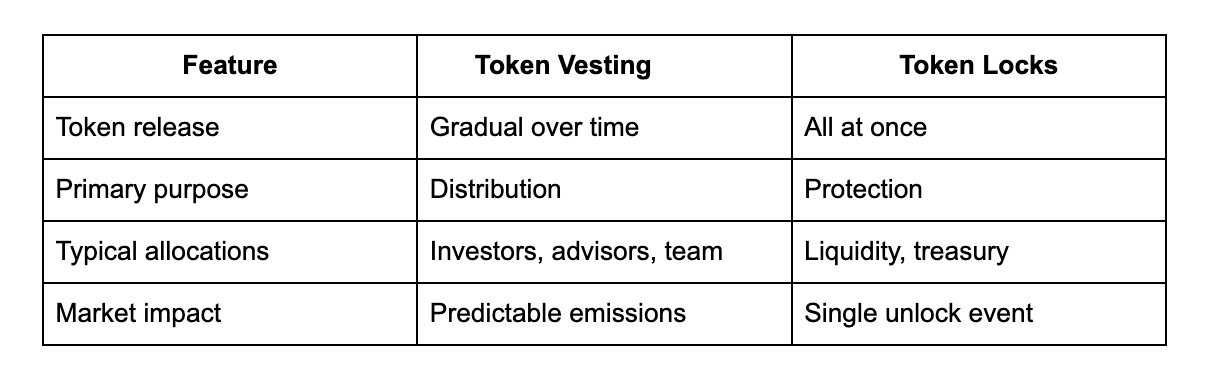
In practice:
- Vesting automates distribution and manages long-term token supply
- Locks protect funds during critical stages
Which Should Your Project Use?
Most established projects use both, applied to different allocations.
Token vesting is best used for:
- Founders and team tokens
- Advisor and contributor allocations
- Private or seed investors
- Any allocation tied to long-term value creation
Token locks are best used for:
- Liquidity pool tokens
- Treasury reserves
- Strategic funds requiring temporary restriction
Using both together
- A common and effective structure includes:
- Locked liquidity for anti-rug security
- Vested team tokens for long-term alignment
This approach balances trust at launch with sustainable token distribution over time.
How Investors View Vesting and Locks
From an investor perspective:
- Locked liquidity signals protection against rugs
- Vested team allocations suggest long-term commitment
- Clear schedules reduce uncertainty
Projects without either mechanism are often considered higher risk, regardless of intent.
Final Thoughts
Token vesting and token locks are complementary tools, not substitutes.
- Vesting supports long-term project sustainability
- Locks protect users and liquidity during key phases
Choosing the right structure, and making it verifiable on-chain, is one of the most important steps in launching a credible token. Clear token distribution builds trust.
You can create token locks and vesting schedules from within the Team Finance Dashboard.